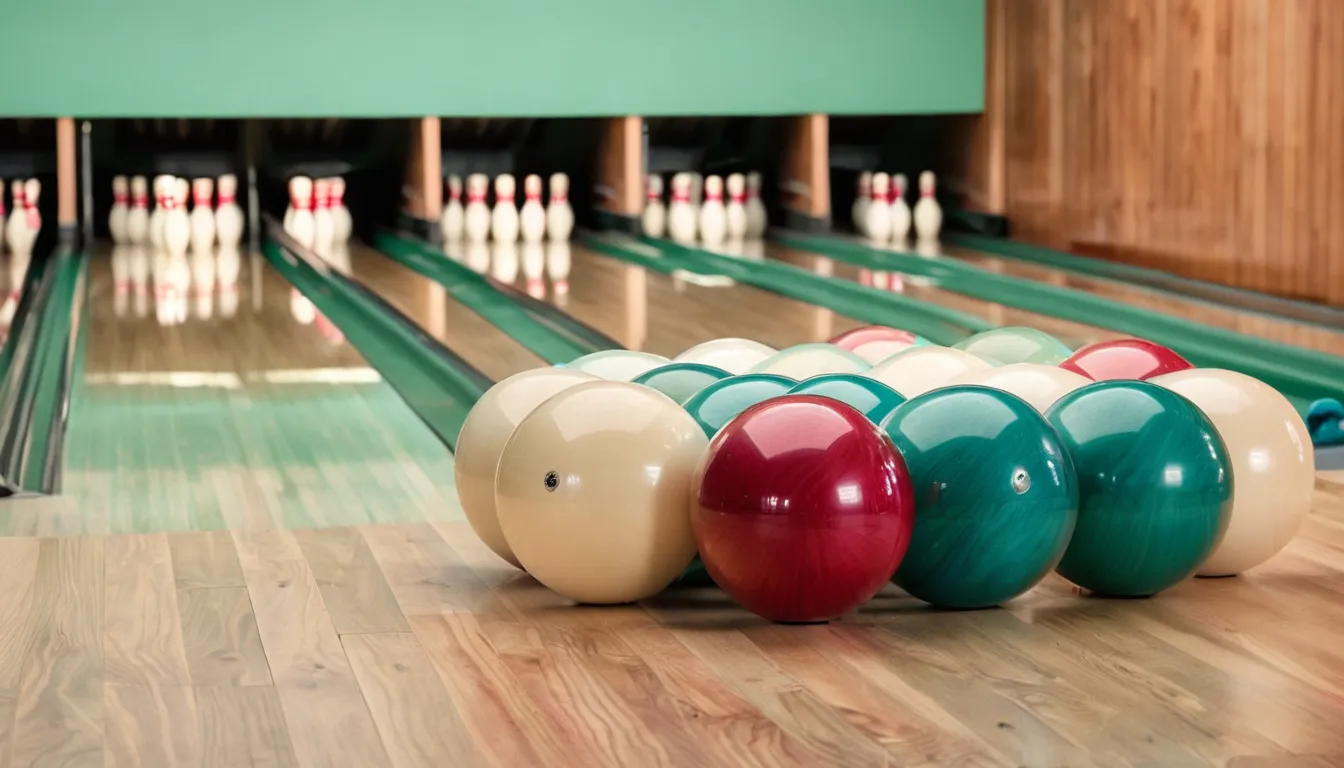
What house balls are
House balls are the balls a center keeps on racks for anyone to use. They are usually made of polyester, often called plastic, with a hard, smooth cover. They tend to roll fairly straight, which suits beginners and is one reason many experienced bowlers also use a plastic ball for spares. They are drilled with standard holes, so the fit will never be as exact as a ball drilled for your hand, but you can usually find one that works.
The weight in pounds is normally marked on the ball, often near the finger holes. Many centers also color their house balls by weight, but the colors differ from one center to the next, so read the number.
Choosing a weight
The heaviest ball allowed under the rules is 16 pounds, and house balls usually run from about 6 to 16 pounds. Heavier balls hit the pins with more force, but only if you can swing them smoothly and accurately. A ball that is too heavy makes you muscle the swing, which pulls your shot off line and tires you out by the third game.
- Hold the ball with your fingers in it and let your arm hang. You should be able to swing it gently back and forward without your shoulder pulling or your wrist bending back.
- If your arm feels shaky after a few throws, drop a pound or two.
- If the ball feels light enough to throw like a softball, try one pound heavier.
- Start lighter if you have wrist, elbow or shoulder problems, and ask a doctor or physical therapist if you are unsure what is safe for you.
A ball that fits your fingers well can feel lighter than a heavier one with loose holes. Get the fit right first, then settle the weight.
Checking the thumb hole
Put your thumb all the way into the thumb hole. It should go in without forcing and turn slightly with a little resistance. When you pull it out, it should slide free without sticking. A thumb hole that grips too tightly is the most common reason a ball lurches off line or hurts the thumb. A hole that is far too loose makes you squeeze, which strains the hand.
Checking the finger holes and span
House balls use a conventional grip, with the middle and ring fingers going into the finger holes up to the second knuckle. The span is the distance from the thumb hole to the finger holes, and it needs to match your hand.
- Put your thumb fully into the thumb hole.
- Lay your middle and ring fingers flat across the finger holes without putting them in.
- The crease of the second knuckle on those fingers should sit roughly at the near edge of the finger holes.
- If the crease falls well short of the holes, the span is too long. If it goes well past them, the span is too short. Try another ball.
When the span is right, you can hold the ball without your hand stretching or bunching up, and there is a small gap between your palm and the ball.
At the rack
- Pick up a ball with both hands, holding it by the sides. Keep your fingers out of the gap between balls on the return, where they can get pinched.
- Try three or four balls of the same weight. Holes vary, and one will usually fit better than the rest.
- Remember your ball by its weight and color so you can find it again after a break.
- Put it back on the rack when you leave.
If nothing fits
Some hands, especially very small or very large ones, are hard to fit from a house rack. Try a lighter ball, since lighter balls often have smaller spans. If you plan to bowl regularly, a pro shop can measure your hand and drill a ball to fit. Ask the staff about how drilling works and what your options are before you buy anything. The grip guide covers how to hold whichever ball you choose.